
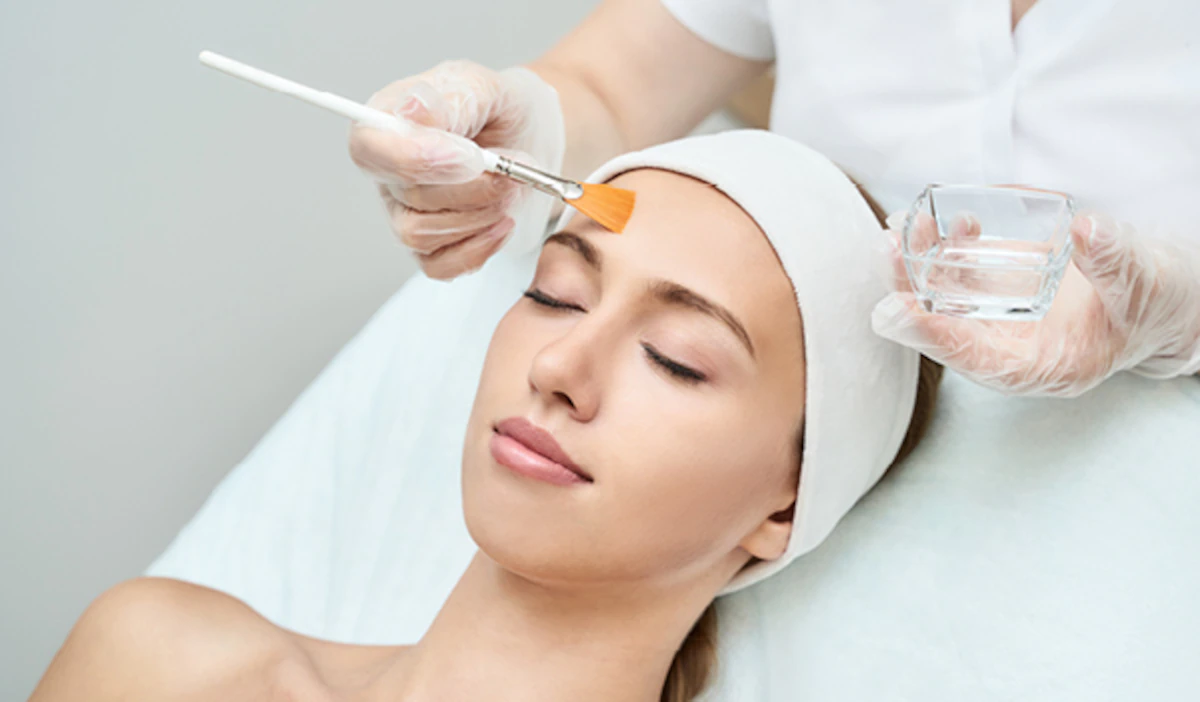
Chemical Peels
A chemical peel is a procedure in which a chemical solution is applied to the skin to remove the top layers. The skin that grows back is smoother. With a light or medium peel, you may need to undergo the procedure more than once to get the desired results.
Chemical peels are used to treat wrinkles, discoloured skin and scars — usually on the face. They can be done alone or combined with other cosmetic procedures. And they can be done at different depths, from light to deep. Deeper chemical peels offer more-dramatic results but also take longer to recover from.
Indications
Chemical peel is a skin-resurfacing procedure. Depending on the issues you’re addressing with the procedure, you’ll choose a chemical peel in one of three depths:
-
Light chemical peel.
A light (superficial) chemical peel removes the outer layer of skin (epidermis). It’s used to treat fine wrinkles, acne, uneven skin tone and dryness. You might have a light peel every two to five weeks.
-
Medium chemical peel.
A medium chemical peel removes skin cells from the epidermis and from portions of the upper part of your middle layer of skin (dermis). It’s used to treat wrinkles, acne scars and uneven skin tone. You might need to repeat the procedure to achieve or maintain the desired result.
-
Deep chemical peel.
A deep chemical peel removes skin cells even deeper. Your doctor might recommend one for deeper wrinkles, scars or precancerous growths. You won’t need repeat procedures to get the full effect.
Risks
A chemical peel can cause various side effects, including:
-
Redness, scabbing and swelling.
Normal healing from a chemical peel involves redness of the treated skin. After a medium or deep chemical peel, redness might last for a few months. Rarely, a chemical peel can cause scarring — typically on the lower part of the face. Antibiotics and steroid medications can be used to soften the appearance of these scars.
-
Changes in skin color.
A chemical peel can cause treated skin to become darker than normal (hyperpigmentation) or lighter than normal (hypopigmentation). Hyperpigmentation is more common after superficial peels, while hypopigmentation is more common after a deep peel. These problems are more common in people with brown or black skin and can sometimes be permanent. A chemical peel can lead to a bacterial, fungal or viral infection, such as a flare-up of the herpes virus — the virus that causes cold sores.
-
Heart, kidney or liver damage.
A deep chemical peel uses carbolic acid (phenol), which can damage heart muscle and cause the heart to beat irregularly. Phenol can also harm the kidneys and liver. To limit exposure to phenol, a deep chemical peel is done a portion at a time, in 10- to 20-minute intervals.
Procedure Description
- The skin is cleansed.
- Depending on the type of peel, the chemical solution will be applied to the skin lightly or rubbed into the skin.
- The patient feels the solution working, either with a tingling feeling (light or medium) or a burning sensation (deep).
- The skin is closely observed as it works. Light to moderate stinging can last for about 15 minutes.
- Once the desired result has been achieved, the chemical solution may be neutralised, and the skin is cleansed.
- If a deep peel has been applied, the skin may be treated with a protective ointment.
- Over the next days (or weeks for deep peels) the outer layers of skin will exfoliate and peel away, revealing a fresh new skin surface.
- The results of a chemical peel typically last several months to years depending on the depth of the peel
After the procedure
After a chemical peel of any depth, your skin will be red, tight, irritated or swollen. Follow your doctor’s directions for sun protection, cleansing, moisturising and applying protective ointments to your skin. And avoid picking, rubbing or scratching your skin. It may take several months before your skin color returns to normal and you can see the full results of the peel.
After a light chemical peel.
Treated skin will be red, dry and mildly irritated — although these effects might be less noticeable with each repeat treatment. Your doctor might apply a protective ointment, such as petroleum jelly, to soothe the skin. You can usually wear makeup the next day if you wish.
Treated areas take about one to seven days to heal after a light chemical peel. New skin might temporarily be lighter or darker than normal.
After a medium chemical peel.
Treated skin will be red and swollen. You’ll feel stinging. Your doctor might apply a protective ointment, such as petroleum jelly, to soothe the area and prevent dryness. After five to seven days, you can use cosmetics to cover any redness.
Use ice packs for comfort. Over-the-counter pain-relieving medication, such as ibuprofen and naproxen sodium, may help reduce any discomfort. You’ll likely schedule a checkup soon after your treatment so that your doctor can monitor your healing.
Results
A light chemical peel improves skin texture and tone and lessens the appearance of fine wrinkles. The results are subtle but increase with repeated treatments. If you have a medium chemical peel, treated skin will be noticeably smoother. After a deep chemical peel, you’ll see a dramatic improvement in the look and feel of treated areas. Results may not be permanent. Over time, age and new sun damage can lead to new lines and skin color changes.
With all peels, the new skin is temporarily more sensitive to the sun. Talk with your doctor about how long to protect your skin from the sun.
How much it costs pls for the chemical peel? Please advise the prices of the three types of chemical peel. Light, medium and deep
Please give us a call for further info.